
Off Campus: The Complete Guide — Full Cast, Production Details, Viewership Numbers, and Everything Else Worth Knowing
Few Prime Video series have gone from “promising book adaptation” to “certified cultural moment” as quickly as Off Campus did. Within days of its May 2026 premiere, the hockey-romance drama was breaking into Amazon’s all-time top three series debuts, trending across social platforms, and turning a cast of relative unknowns into some of the most searched names in entertainment. This guide pulls together everything currently known about the show — the source material it’s built on, who’s playing who, how it was made, how it performed, what critics and audiences think, and where it’s headed next — into one comprehensive resource.
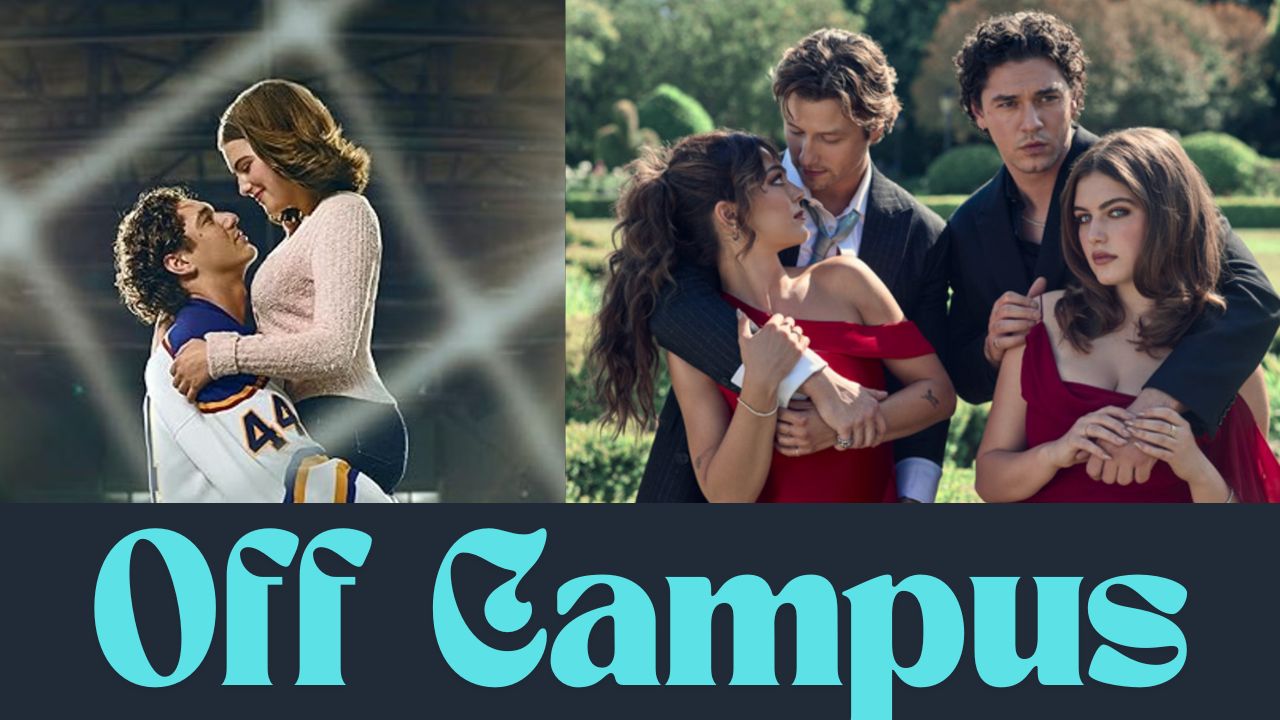
For our ongoing coverage of the show’s second season specifically, our Season 2 cast changes breakdown is a good companion piece to this guide, and you can find the rest of our Off Campus coverage on the MediaAtLife homepage.
What Off Campus Is: Premise and Format
At its core, Off Campus is a romantic drama set at the fictional Briar University in Massachusetts, following a tight-knit group of college hockey players and the people they fall in love with. The show doesn’t center on one couple across its entire run the way most romance series do. Instead, it uses a rotating structure — each season builds around a different central relationship drawn from within the same friend group, while previous seasons’ couples remain part of the world in supporting roles. Season 1 belonged to Hannah Wells, a hockey-averse music major, and Garrett Graham, Briar’s confident, womanizing star center, who strike a deal where she helps improve his grades in exchange for his help getting her crush’s attention — a classic fake-relationship setup that predictably turns into something real.
That structure is inherited directly from the source material, and it’s one of the more distinctive choices the show has made compared to other streaming romances. Rather than trying to stretch one couple’s story across multiple seasons, Off Campus treats each season as a mostly self-contained love story that still deepens the wider Briar University ecosystem — friendships, rivalries, family drama, and campus gossip all carrying through even as the romantic focus shifts.
The Book Series That Started It All
Off Campus is based on Elle Kennedy’s Off-Campus series, which began with The Deal in 2015 and has sold more than six million copies since. Kennedy’s series became a genuine phenomenon within the New Adult romance genre well before Hollywood came calling, building a passionate, primarily BookTok-driven readership over the following decade. The core series consists of five books, each centered on a different member of the same Briar University hockey circle:
- The Deal (2015) — Hannah Wells and Garrett Graham. The fake-dating arrangement that started it all, and the basis for Season 1.
- The Mistake (2015) — John Logan and Grace Ivers. A one-night stand gone wrong, followed by Logan’s yearlong attempt to earn a second chance.
- The Score (2016) — Allie Hayes and Dean Di Laurentis. A friends-with-benefits arrangement between two people who insist they’re keeping things casual, and the basis for Season 2.
- The Goal (2016) — Sabrina James and John “Tucker” Tucker. A one-night stand that results in an unplanned pregnancy, forcing two people who barely know each other to build a relationship.
- The Legacy (2021) — A departure in format from the first four books, told as four novellas following the original couples three years after graduation.
Beyond the core five, Kennedy expanded the universe with two spinoff series: Briar U (four books, following a younger generation at the same school) and Campus Diaries (three books, including The Graham Effect, which follows Garrett and Hannah’s own daughter). That’s an enormous amount of source material still waiting to be adapted, which is a big part of why Amazon MGM Studios felt comfortable committing to a second season before the first had even premiered — there’s no shortage of stories left to tell within this world if the show continues performing well.
Meet Elle Kennedy: The Author Behind the Books
Understanding Off Campus‘s success on screen is easier with some context on where the story originally came from. Elle Kennedy is a Canadian author who built her career writing contemporary and New Adult romance, with the Off-Campus series becoming her breakout, career-defining work after The Deal was released in 2015. The series found its audience gradually at first, through traditional romance-reader word of mouth, before experiencing a massive resurgence years later when BookTok discovered it — a common pattern for backlist romance titles that find an entirely new generation of readers through short-form video recommendations.
That resurgence is a big part of why Off Campus made sense as a television adaptation a full decade after its original publication. Unlike many book-to-screen deals that move quickly to capitalize on a book’s initial release buzz, Kennedy’s series proved its staying power over years, continuing to sell strongly and generate new readers well after its original publication window — evidence to any studio considering an adaptation that the audience wasn’t a passing trend but a durable, ongoing fanbase.
A Closer Look at Each Book in the Series
Since the show’s rotating structure means each season maps roughly onto a different book, it’s worth understanding what’s actually in each installment for anyone trying to predict where the show goes next.
The Deal introduces Hannah Wells, a talented but under-confident aspiring singer-songwriter, and Garrett Graham, Briar’s hockey captain, whose fake-dating arrangement — she’ll help tutor him and he’ll help her catch her crush’s attention — inevitably gives way to real feelings. It’s the classic “opposites attract” fake-relationship trope that launched the entire series, and its screen adaptation comprised Season 1.
The Mistake follows John Logan, established across the first book as one of Garrett’s closest friends and a notorious campus player, and Grace Ivers, a freshman he has a one-night stand with before making a careless error that damages their connection before it even properly begins. The bulk of the book follows Logan’s yearlong effort to earn back her trust, a slower and more emotionally weighted arc than The Deal‘s central romance. With Grace Ivers now cast on the show via India Fowler, this storyline is clearly being set up for a future season, even though Season 2 is prioritizing Dean and Allie’s story instead.
The Score centers on Allie Hayes and Dean Di Laurentis — the book currently being adapted for Season 2. Allie is dealing with the pressure of an approaching graduation without a clear plan for what comes next, while Dean, established as charming but not particularly serious in the earlier books, becomes an unexpectedly steady presence in her life. Their arrangement starts as friends-with-benefits, explicitly kept casual by mutual agreement, before deepening into something both of them initially resist acknowledging.
The Goal turns to John “Tucker” Tucker and Sabrina James, whose one-night stand results in an unplanned pregnancy. The book is notable within the series for tackling a heavier, more consequence-driven storyline than its predecessors, following the pair as they navigate an unexpected transition into co-parenthood while a real relationship slowly develops between them.
The Legacy, published in 2021, breaks from the series’ earlier one-couple-per-book format entirely. Instead, it’s structured as four interconnected novellas, each catching up with one of the original couples three years after their college graduation — giving longtime readers a look at where Hannah and Garrett, Logan and Grace, Allie and Dean, and Tucker and Sabrina all end up once their Briar University years are behind them.
Beyond the core five, the Briar U spinoff series follows a younger generation of characters at the same university, while Campus Diaries — including The Graham Effect — jumps forward even further, following the children of the original characters navigating their own version of the Briar experience. Together, that’s a genuinely enormous well of adaptable material, more than enough to sustain the show well beyond a second or third season if Amazon MGM Studios continues investing in the franchise.
From Page to Screen: How the Adaptation Came Together
The television adaptation was developed by Louisa Levy, who serves as creator and co-showrunner alongside Gina Fattore. The two lead a substantial executive producing team that includes Silver Tree, along with Temple Hill Entertainment’s Marty Bowen and Wyck Godfrey — the producing duo behind the Twilight films and The Fault in Our Stars, among other major YA adaptations — as well as James Seidman, Neal Flaherty, and Leanna Billings. Ryan Silva served as producer on the ground.
Having Bowen and Godfrey attached gave the project real pedigree from the start. Temple Hill has a long track record of turning beloved YA and New Adult book properties into successful screen adaptations, and their involvement was an early signal that Amazon MGM Studios was treating this project with the same level of care and investment as some of its bigger swings. The series was produced through 28 In Blue, Drowning Girl Productions, Temple Hill Entertainment, and Billings Productions, in partnership with Amazon MGM Studios.
Season 2’s renewal came remarkably early — Amazon MGM Studios confirmed the second season in February 2026, months before Season 1 had even premiered on May 13. That kind of pre-emptive renewal is relatively rare and usually reflects strong internal testing data or a studio’s confidence in a project’s built-in audience, both of which were likely factors given the size of Kennedy’s existing readership.
Production Details: Where and How It Was Made
Season 1 was filmed in Vancouver, British Columbia, a common production hub for North American streaming series thanks to its tax incentives and versatile locations that can double for various American settings. Cinematography was handled by Colin Hoult and Nick Thomas, while the editing team included Nicole Brik, Gordon Rempel, Lisa Robison, and Nathan Easterling. Episodes ran between 46 and 56 minutes, giving the show more room to breathe than a typical hour-long network drama while still keeping individual episodes tight enough for binge-friendly viewing.
One of the more demanding aspects of production involved getting the cast believable on the ice. None of the principal actors came in with significant hockey or skating experience, which meant an intensive training process before filming began. Belmont Cameli, who plays team captain Garrett Graham, has spoken about attending a specialized hockey bootcamp and training alongside professional players to convincingly sell his character’s athleticism — including working with New York Rangers player Vinnie Iorio, who served as his stunt double for more demanding skating sequences. That level of physical preparation is part of why the show’s hockey scenes read as more convincing than the genre’s efforts typically manage.
Music for the series was composed by Keegan DeWitt, whose score work sits alongside a soundtrack strategy that leaned heavily into needle-drops and licensed music — a choice that would end up becoming one of the show’s most talked-about elements once it premiered.
Premiere, Release Strategy, and Episode Count
Off Campus Season 1 premiered on May 13, 2026, with all eight episodes released simultaneously — a full binge-drop rather than a weekly rollout, which has become the standard release strategy for Prime Video’s romance-driven YA titles. That decision matters for how a show like this builds momentum: a full-season drop encourages the kind of rapid, word-of-mouth binge-watching that tends to produce a concentrated viewership spike in the opening days, rather than the slower weekly build a serialized rollout would create. Given how the numbers ultimately played out, that strategy appears to have worked exactly as intended.
The season adapts The Deal, the first book in Kennedy’s series, expanding its central storyline across eight episodes running between 46 and 56 minutes each — enough space to develop not just Hannah and Garrett’s relationship but the wider friend group and campus setting that will carry the show through future seasons.
Full Season 1 Episode Guide
All eight episodes of Season 1 dropped simultaneously on May 13, 2026, with runtimes ranging between 46 and 56 minutes. Here’s a spoiler-light rundown of what each one covers, drawn from official episode descriptions.
Episode 1 — “The Deal.” The season opener sets up the show’s central premise: Hannah, a hockey-averse music major, and Garrett, Briar’s star center with a well-earned reputation as a womanizer, strike an unlikely arrangement where she’ll help boost his grades in exchange for his help catching her crush’s attention.
Episode 2 — “The Practice.” Their fake arrangement gets its first real test when the two are forced to share a room during an overnight house party, pushing them into closer, more complicated territory than either expected.
Episode 3 — “The Orgasm.” With the deal seemingly working in both their favor, Hannah raises the stakes by redefining the terms of their arrangement, deepening the tension between performance and genuine feeling that runs through the season.
Episode 4 — “The Breakup.” After completing his end of the bargain, Garrett comes to terms with his real feelings for Hannah, and his teammates push him to make a move at a campus event — setting up a pivotal, emotionally charged turning point for the couple.
Episode 5 — “The Cold Turkey.” Garrett and Hannah confess their mutual feelings and become an official couple, right as Garrett’s father asks him home for Thanksgiving to meet his new fiancée — while Tucker’s elaborate, doomed Friendsgiving plans provide the episode’s comic relief.
Episode 6 — “The Breakaway.” A hockey fundraiser brings tension between Garrett and Logan to a head, while Hannah and Justin’s musical collaboration hits its biggest obstacle yet, and other campus romances continue simmering in the background.
Episode 7 — “The Faceoff.” Hannah is forced to confront unresolved pain from her past as Garrett faces the toughest game of his season, and Allie has a notable encounter that sets up threads for Season 2.
Episode 8 — “The Line Change.” The season finale deals with the fallout from a pivotal hockey game against rival school St. Anthony’s, rattling the wider Hawks friend group as Hannah works to find her own voice heading into the season’s emotional conclusion.
Viewership Numbers and What We Know About Off Campus’s Performance
Streaming services like Prime Video don’t publicly disclose production budgets or traditional revenue figures for individual series the way box office numbers get reported for films, and Off Campus is no exception — Amazon has not released a specific budget figure for the show. What the company has released, however, is a substantial amount of viewership data, and it paints a genuinely striking picture of the show’s performance.
According to Amazon’s own internal figures, Off Campus reached 36 million viewers worldwide in its first 12 days of streaming, a window that included two full weekends. That total made it Prime Video’s third most-viewed series debut of all time, trailing only The Lord of the Rings: The Rings of Power and Fallout — putting a hockey romance adaptation with a cast of relative newcomers ahead of established franchises like The Boys, Reacher, and even The Summer I Turned Pretty, the show Amazon had previously leaned on to reach similar audiences. It’s worth flagging, as several outlets covering the numbers pointed out, that Amazon doesn’t publicly define exactly what counts as a “viewer” in these figures — meaning the total likely includes people who watched only a portion of a single episode, not just full-season completions. Even accounting for that caveat, the scale of the number relative to Amazon’s own historical benchmarks is a meaningful signal of success.
Perhaps more significant than the overall total was Off Campus‘s performance within a specific demographic: among women aged 18 to 34, the show became Prime Video’s number one series debut of all time, surpassing every previous title in that category. That’s the exact audience Amazon has been trying to capture and retain since The Summer I Turned Pretty proved there was a substantial, underserved market for YA and New Adult romance on the platform — and Off Campus didn’t just reach that audience, it out-performed the show that originally proved the strategy worked.
Nielsen’s weekly streaming data backed up the picture painted by Amazon’s own figures. In its second week of release, Off Campus saw a 34% jump in viewership, generating 690 million minutes watched and landing at fifth place on Nielsen’s list of the top 10 original streaming series that week — a rare feat for a show already two weeks removed from its premiere, when most titles see viewership decline rather than grow. It was also one of only two Prime Video titles to crack that particular top 10 list, alongside the final season of The Boys.
For direct comparison, Forbes contributor Paul Tassi noted that Netflix’s Bridgerton — often cited as the genre’s benchmark — was watched by 82 million households after four weeks, well ahead of Off Campus‘s 36 million in 12 days. But that comparison comes with important context: Netflix’s subscriber base dwarfs Amazon’s, and Bridgerton’s more recent seasons haven’t sustained that same scale of viewership. Given that trajectory, and with Off Campus Season 2 expected to build on an already-large existing audience, the gap between the two franchises may well narrow over time rather than remain fixed. Tassi also pointed out that Off Campus was produced at a fraction of the cost of a series like The Rings of Power, meaning its return on investment for Amazon is almost certainly far more favorable than its raw viewership numbers alone suggest — a hit romance drama with a modest, contained production budget is a much easier show to justify renewing indefinitely than one of the platform’s blockbuster-scale tentpoles.
A Note on “Revenue”: How Streaming Shows Actually Make Money
Because Off Campus streams on a subscription platform rather than being sold individually or supported by traditional advertising in most markets, it doesn’t generate “revenue” in the way a film’s box office gross does, and Amazon has not disclosed a specific production budget or direct earnings figure tied to the show. This is standard practice across the streaming industry — Netflix, Amazon, and other major platforms generally treat individual production budgets and per-title revenue as confidential business information, disclosing only aggregate viewership metrics rather than financial specifics.
That said, it’s possible to reason about the show’s business value using the information that has been made public. A series that becomes Prime Video’s third-biggest debut of all time, and its number-one debut among the specific demographic Amazon has been actively trying to grow, delivers substantial value to the platform in the form of subscriber acquisition and retention — the actual metric that matters most to a subscription streaming business, since the entire model depends on getting and keeping paying members rather than generating revenue per episode watched. Industry analysts, including Forbes’s Paul Tassi, have pointed out that Off Campus was produced at a fraction of the cost of Amazon’s biggest tentpole productions like The Rings of Power, meaning its viewership-to-cost ratio is likely far more favorable than its raw numbers suggest on their own — a relatively modest investment generating one of the platform’s best-performing debuts in a specific, highly desirable demographic represents exactly the kind of efficient bet a streaming service wants to keep making.
For context on scale, Temple Hill Entertainment’s involvement — the production company behind the Twilight franchise and other major YA adaptations — suggests a mid-tier scripted drama budget consistent with other contemporary romance and YA television, rather than the blockbuster-level spending associated with Amazon’s fantasy and action tentpoles. Without an official figure from Amazon, any more specific budget estimate would be speculation, but the show’s relatively contained setting — a single university campus, a modest principal cast, no large-scale visual effects — is consistent with a production designed to be sustainable across multiple seasons rather than a one-time prestige investment.
Critical and Audience Reception
Off Campus didn’t just perform well commercially — it was also well received critically. The series debuted with a 93% approval rating from critics on Rotten Tomatoes, based on an initial batch of reviews, alongside an 84% audience score from more than 50 user ratings. Those numbers place it firmly in “certified fresh” territory by the platform’s standards, a strong outcome for a romance adaptation in a genre that critics don’t always take seriously.
ScreenRant’s review, for instance, rated the show a 7 out of 10, praising it as an unexpectedly thoughtful and sexy adaptation with a strong ensemble cast elevating two genuinely compelling lead performances. That kind of reception — critics acknowledging a show exceeded genre expectations rather than merely meeting them — tends to be a meaningful driver of the exact word-of-mouth growth Nielsen’s second-week data captured, where a show’s viewership actually climbs after premiere rather than tapering off.
The Soundtrack: A Genuine Part of the Show’s Identity
Music became one of Off Campus‘s defining features almost immediately, extending well beyond Keegan DeWitt’s score into a carefully curated selection of licensed needle-drops that fans latched onto individually. The show’s most viral musical moment came from a scene set to Jennifer Lopez’s “On the Floor,” which took on a life of its own on social media independent of the show itself, becoming one of the season’s most-referenced scenes across TikTok and other platforms.
The soundtrack’s reach extended into real-world crossover moments involving the cast themselves. Belmont Cameli joined The Kid Laroi on stage on June 6, 2026, to perform “Girls” live, after the track had been prominently featured in the series — a rare instance of a show’s cast directly engaging with the artists behind its soundtrack in a live setting. Ella Bright, meanwhile, released her own recorded contribution to the Off Campus soundtrack, a duet version of “Baby Now That I’ve Found You” with Niall Horan, in July 2026, extending the show’s musical footprint well past the episodes themselves and into original music tied to the property.
That level of soundtrack engagement — cast members performing alongside artists, original recordings tied to the show’s world, needle-drops becoming standalone viral moments — is unusual for a streaming drama and reflects a level of music-first marketing more commonly associated with a show like Euphoria or Bridgerton than a typical romance adaptation. It’s also set expectations for Season 2, where Ella Bright and Mika Abdalla have already teased a “big pop-star feature” designed to top the Season 1 needle-drop moment, without confirming who that artist will be.
Full Season 1 Cast and Character Guide
Here’s a detailed breakdown of who’s who in Off Campus, covering both the leads and the wider ensemble that’s made the show’s world feel so lived-in.
Ella Bright as Hannah Wells
Hannah Wells is the show’s female lead for Season 1 — a reserved, self-possessed music major and singer-songwriter who doesn’t care for hockey and enters into a fake-dating arrangement with Garrett Graham to make her crush jealous, only to find herself falling for the arrangement’s other half instead.
Ella Bright, who plays her, was born on November 27, 2006 in New York City and grew up in North London, giving her dual American-British citizenship. She’s been acting since age 8, though by her own account it started less as a calculated career move than a practical solution for a self-described “loud child.” Her breakout role came on the CBBC series Malory Towers, where she played Darrell Rivers from age 12 to 18 — a role that earned her both Children’s BAFTA and Children’s and Family Emmy Award nominations, and one she’s described as giving her a “found family” of castmates she remains close to today. Beyond Malory Towers, Bright’s earlier credits include a young Kate Middleton in an episode of The Crown, a West End run as Lily Potter Jr. in Harry Potter and the Cursed Child starting at age 11, and a role in the 2018 film Holmes & Watson alongside Will Ferrell and John C. Reilly.
Bright was 19 and in the middle of studying for her A-levels when she was cast as Hannah, a role that upended plans she’d been making toward university. She’s also a singer, and released a duet version of “Baby Now That I’ve Found You” with Irish singer Niall Horan in July 2026, pulled from the Off Campus soundtrack.
Belmont Cameli as Garrett Graham
Garrett Graham is Briar’s confident, charismatic hockey team captain — a character introduced with a reputation as a womanizer, whose arc across Season 1 involves learning genuine vulnerability through his evolving relationship with Hannah, layered with a complicated relationship with his father.
Belmont Cameli, who plays him, was born on February 28, 1998 in Naperville, Illinois, making him roughly nine years older than his on-screen love interest. His path to acting wasn’t a straight line: Cameli played football, wrestling, and volleyball in high school, then enrolled at the University of Illinois to study business. His father died unexpectedly a couple of months into his first semester, and after finishing out the year, Cameli dropped out to pursue acting and filmmaking instead, moving to Chicago to support himself through modeling work before relocating to Los Angeles in 2019. His breakthrough came with a recurring role as Jamie Spano, son of original Saved by the Bell alum Jessie Spano, in Peacock’s 2020 reboot of the series — a role that put him opposite original cast members like Elizabeth Berkley and Mario Lopez. He went on to appear in the Netflix film Along for the Ride (2022), the crime drama The Alto Knights (2025), and the Until Dawn film adaptation (2025) before landing the role of Garrett.
Preparing for Garrett required Cameli to learn hockey essentially from scratch, training at a dedicated bootcamp and working directly with professional players to convincingly play a college athlete. Beyond acting, Cameli donated a kidney in 2018 through a 14-person transplant chain that ultimately helped save seven lives — a detail that’s come up frequently in profiles of him since Off Campus premiered. He’s also spoken about wanting to move toward darker, more unexpected roles going forward rather than being typecast purely as a heartthrob.
Mika Abdalla as Allie Hayes
Allie Hayes is introduced in Season 1 as part of the wider Briar University social circle, with a bigger storyline waiting in the wings — she’s the female lead of Season 2, where her friends-with-benefits arrangement with Dean Di Laurentis takes center stage. Mika Abdalla plays her, stepping up from a smaller Season 1 role into one of the show’s two lead positions for Season 2.
Stephen Kalyn as Dean Di Laurentis
Dean Di Laurentis rounds out the core friend group as one of Garrett’s fellow hockey players, with a more flirtatious, harder-to-pin-down personality that sets up his eventual dynamic with Allie. Stephen Kalyn, who plays him, similarly moves from a supporting Season 1 presence into a lead role for Season 2, giving both new leads a season’s worth of groundwork before their storyline takes over.
Antonio Cipriano as John Logan
John Logan is Garrett’s best friend and another member of the Briar Hawks, established in Season 1 as the group’s effortlessly charming, popular member — someone whose story, per the books, gets considerably more complicated once Grace Ivers enters the picture. Antonio Cipriano, who plays him, brings a background in musical theater to the role, having made his Broadway debut in Jagged Little Pill in 2019. He’s also appeared in Disney+’s National Treasure: Edge of History, Amazon’s Harlan Coben’s Shelter, and had a recurring role on Pretty Little Liars: Original Sin.
Jalen Thomas Brooks as John “Tucker” Tucker
Tucker completes the core four-person friend group, with his own book-based storyline — a pregnancy plot with Sabrina James in The Goal — still waiting to be adapted in a future season. Jalen Thomas Brooks plays him as part of the show’s original ensemble.
Josh Heuston as Justin
Justin Kohl was introduced in Season 1 as a musician character connected to several of the show’s live-performance moments, played by Josh Heuston. Heuston will not return as a series regular for Season 2 — the only confirmed departure from the original cast — though showrunner Louisa Levy has said she wouldn’t rule out finding a way to bring the character back in a future season, since his book-based love interest, Stella, has yet to be introduced on screen.
Steve Howey as Garrett’s Father
Steve Howey rounds out the show’s more prominent adult cast as Garrett’s father, whose strained relationship with his son forms one of Season 1’s more grounded emotional throughlines outside the central romance.
The Wider Supporting Ensemble
Beyond the principal cast, Off Campus features a substantial supporting ensemble in recurring roles: Julia Sarah Stone, Khobe Clarke, Chad Willett, Brandon Scott, Miles Gutierrez-Riley, Jennifer Spence, Chelah Horsdal, Brenna Llewellyn, and Dylan Kingwell all appear across Season 1, filling out the wider world of Briar University — friends, family members, and campus figures who give the show’s setting a sense of scale beyond its central friend group.
A Closer Look at the Friend Group’s Dynamics
While Hannah and Garrett carried Season 1’s central plot, much of the show’s texture comes from the friend group surrounding them — and each member’s positioning within that group offers useful context for where the show might be headed in future seasons.
John Logan, established early as the group’s most effortlessly charming member, occupies an interesting narrative position. Season 1 gives him enough screen time to establish his personality — confident, quick-witted, comfortable being the center of attention — without yet cashing in the more complicated arc that awaits him in The Mistake. That’s a deliberate long game on the show’s part: since Grace Ivers only joined the cast weeks before Season 1 premiered, Logan’s fuller storyline was always going to have to wait, likely until a season beyond even Season 2, given that Season 2 is prioritizing Dean and Allie’s story instead. Adding a further layer to his character, Logan has a younger, nonbinary sibling named Jules who runs Briar’s unofficial gossip account, colloquially known as Fifth Line — a detail that gives the show a built-in, in-universe explanation for how campus gossip circulates so efficiently, and one that could easily expand into its own subplot in future seasons.
Dean Di Laurentis, by contrast, gets a more pointed setup in Season 1 specifically because his story is next in line. Introduced as flirtatious and a little harder to read than his friends, his dynamic with Allie is teased across the season’s back half — including a notable encounter flagged in the Episode 7 description — that pays off directly once Season 2 begins. That kind of connective tissue between seasons, planting small setup beats a full season before they pay off, is a sign of a writers’ room thinking several steps ahead rather than treating each season as fully self-contained.
Tucker’s Season 1 presence, meanwhile, leans more comedic — his elaborate, ultimately disastrous Friendsgiving cooking plans in “The Cold Turkey” are among the season’s most-cited lighter moments. His own book-based storyline, the unplanned-pregnancy arc from The Goal, remains entirely unadapted so far, positioning him as a strong candidate for a future season once Dean and Allie’s story has run its course.
Garrett’s arc, meanwhile, ties together the show’s more grounded emotional material. His strained relationship with his father, played by Steve Howey — complicated further by his father’s new engagement, introduced in the Thanksgiving-centered fifth episode — runs parallel to his romantic development with Hannah, giving Season 1’s central couple storyline additional weight by tying Garrett’s capacity for vulnerability with Hannah directly to his unresolved feelings about his own family.
Behind the Chemistry: How the Cast Prepared Together
Part of what made Season 1’s ensemble work as convincingly as it did came down to how the cast approached building relationships with each other before filming even began. Ella Bright has spoken about the show’s ensemble feeling like a “found family” similar to what she experienced on Malory Towers — a comparison she’s made explicitly, describing the transition from one strong ensemble to another. She’s also described the intensity of the show’s chemistry reads during casting, recalling in one interview how palpable the tension in the room was during her first read opposite Cameli, with the producers specifically searching for a spark that would need to carry an entire season.
That kind of care in the casting process — prioritizing genuine chemistry over simply matching actors to a character breakdown — is often cited by producers of romance-driven projects as the single most important variable in whether an adaptation succeeds. Given how strongly Off Campus performed both critically and commercially, it’s a reasonable bet that the extended casting process paid off exactly as intended.
The Press Tour and Promotional Rollout
Season 1’s promotional campaign leaned heavily into personal, cast-driven content rather than a purely traditional press junket approach, which turned out to be a smart strategic choice given how quickly fans latched onto individual cast members. Ella Bright and Belmont Cameli made appearances across major outlets during the lead-up to premiere, including stops that gave fans an early look at their on-screen chemistry translating into real off-screen rapport — interviews that, in hindsight, played a meaningful role in building the exact kind of anticipation that contributed to the show’s massive opening viewership numbers.
Bright, in multiple interviews conducted around the premiere, spoke candidly about the whiplash of going from studying for her A-level exams to headlining one of the year’s most anticipated streaming adaptations, describing being recognized by fans as “surreal” even during the earliest stages of the show’s marketing push. She’s also discussed the closeness of the Off Campus cast in terms echoing her experience on Malory Towers, describing an ensemble that supported each other through the pressures of a first major streaming release — a dynamic that likely contributed to the show’s on-screen chemistry reading as genuine rather than manufactured.
That promotional pattern has continued well into the show’s hiatus between seasons. Rather than going quiet during the gap before Season 2, cast members have remained visible and engaged — from Bright and Mika Abdalla teasing the pop-star cameo at Obsessed Fest, to Antonio Cipriano personally surprising India Fowler with her own casting news, to Bright and Cameli’s direct-to-camera message at the September 2026 Obsessed Retreat confirming filming was underway. That sustained, personality-driven promotional approach has helped keep Off Campus in the cultural conversation well beyond its initial premiere window, which is no small thing for a show without new episodes to point back to during a multi-month gap.
Cultural Impact and the BookTok Factor
It’s difficult to fully explain Off Campus‘s rapid rise without understanding the audience it was built for. Elle Kennedy’s Off-Campus books had already sold more than six million copies by the time the show was greenlit, with a substantial portion of that readership discovering the series through BookTok — the romance-and-reading corner of TikTok that’s become one of publishing’s most powerful discovery engines over the past several years. That meant Off Campus arrived with a built-in, highly engaged fanbase who had spent years imagining how Hannah, Garrett, and the rest of the Briar Hawks might look and sound on screen.
That kind of pre-existing investment is a double-edged sword for any adaptation. It guarantees an audience the moment a show premieres, but it also means every casting choice gets measured against years of reader expectations, and any perceived deviation from the books risks alienating the exact fans a studio is counting on to drive word-of-mouth growth. Notably, showrunner Louisa Levy has publicly defended the casting of Ella Bright as Hannah following some age-related criticism from parts of the fandom — a reminder that even a broadly well-received adaptation isn’t immune to the scrutiny that comes with translating a beloved book series to screen.
Despite that scrutiny, Off Campus appears to have largely won over its built-in readership, based on both the strength of its audience Rotten Tomatoes score and the sheer volume of fan-generated content the show produced within weeks of premiering — fan edits, theory videos, needle-drop compilations, and casting reaction posts all became a fixture of Off Campus discussion online almost immediately, a strong signal that the adaptation successfully translated the books’ appeal into a new medium rather than diluting it.
Season 2: What’s Changing and What’s Staying the Same
With Season 1’s success setting an unusually high bar, Season 2 carries real weight heading into production. Filming began in Vancouver in June 2026, following the same production hub used for the first season, with production reportedly wrapping between September and October.
The most significant change is the shift in central couple. Following the books’ internal logic, Season 2 moves the spotlight to Allie Hayes and Dean Di Laurentis, adapting The Score — the third book in Kennedy’s original series. Both Mika Abdalla and Stephen Kalyn, who play Allie and Dean, had smaller roles in Season 1, meaning this season represents a promotion within an already-established cast rather than the introduction of unfamiliar actors. Prime Video’s own marketing has framed the shift directly, describing the transition as moving “from Garrett and Hannah, to Dean and Allie” while emphasizing that the Off Campus love story continues rather than restarts.
Three new actors are joining the cast for Season 2. India Fowler steps in as Grace Ivers, the love interest tied to John Logan’s eventual storyline from The Mistake, joining just weeks before Season 1 even premiered. Phillipa Soo, well known for originating a role in Hamilton, joins in a recurring capacity as Scarlett, a visiting theater artist directing a production at Briar. And Shay Rudolph rounds out the additions as Summer Di Laurentis, whose surname suggests a family tie to Dean.
Aside from Josh Heuston’s departure, the rest of the original Season 1 regular cast — Ella Bright, Belmont Cameli, Mika Abdalla, Stephen Kalyn, Antonio Cipriano, and Jalen Thomas Brooks — is confirmed to return, giving Season 2 a strong foundation of continuity even as its central romantic focus shifts elsewhere. For the fuller breakdown of everything confirmed about Season 2’s cast, storylines, and production, see our dedicated Season 2 guide.
Meet the New Season 2 Cast Additions
India Fowler as Grace Ivers. Fowler joined the production just two weeks before Season 1 even premiered, in a casting announcement that Antonio Cipriano himself helped deliver via a surprise social media video. She’s previously known for roles in Fear Street: Prom Queen and The Agency, and reports describe her Season 2 character as a sociology major navigating her freshman year at Briar — setting up the eventual Logan-and-Grace storyline from The Mistake, even though that book’s central romance isn’t Season 2’s main focus.
Phillipa Soo as Scarlett. Best known for originating a role in Broadway’s Hamilton and for her work on Doctor Odyssey, Soo joins in a recurring capacity as a visiting theater artist directing an original production within Briar’s drama department — a casting choice widely seen as a significant coup for the show given her profile and pedigree.
Shay Rudolph as Summer Di Laurentis. A Baby-Sitters Club alum, Rudolph’s casting was announced in mid-August 2026, the most recent of the three new additions. Her surname suggests a family connection to Dean Di Laurentis, one of Season 2’s two central leads, hinting that her storyline could add new dimensions to his character beyond his relationship with Allie.
Prime Video used a promotional event in September 2026 — the Obsessed Retreat: Class of ’26, held in the Bavarian Alps — to further build anticipation, with Bright and Cameli recording a direct video message to fans confirming filming was underway and promising the wait would be worth it. That event also placed Off Campus alongside other major upcoming titles in Amazon’s YA slate, including Boys of Tommen, signaling the studio’s continued confidence in the show as a flagship property within its broader romance and YA strategy.
Themes, Tone, and What Makes the Show Work
Beneath its central romance, Off Campus spends a considerable amount of time on material that goes beyond typical genre fare. Episode descriptions and fan recaps point to storylines touching on the aftermath of sexual assault, addiction within a family, and strained parent-child relationships — threads woven through the season alongside its lighter, more traditionally rom-com beats like Tucker’s disastrous Friendsgiving cooking attempt or the group’s ongoing banter. That tonal range is part of why critics singled the show out as more thoughtful than the genre’s reputation might suggest; it’s a series willing to sit with genuinely difficult material without losing its fundamental warmth or its sense of humor.
The show carries a TV-MA rating, reflecting both its more mature content — the books themselves are known within the romance genre for their explicit content — and its willingness to depict college life, relationships, and personal struggles without significantly softening them for a broader audience. That choice ties back to the show’s overall strategy of trusting its built-in readership rather than diluting the material to chase a wider but less invested audience.
Central to the show’s appeal, according to nearly every critical review and fan discussion, is the ensemble’s chemistry — not just between Hannah and Garrett, but across the entire friend group. The believability of Garrett, Logan, Dean, and Tucker’s years-deep friendship does as much work in making the show feel lived-in as the central romance itself, which is part of why supporting characters have generated so much of their own independent fan discussion despite Season 1 being built around just one central couple.
Production Challenges and Behind-the-Scenes Details
Adapting a beloved book series always comes with built-in scrutiny, and Off Campus faced its share of it even amid an otherwise successful rollout. Showrunner Louisa Levy has publicly addressed criticism regarding Ella Bright’s casting as Hannah, defending the choice despite some fan pushback related to the age gap between Bright and her character as depicted in the original novels. That kind of casting debate is fairly standard for high-profile book adaptations with passionate existing fanbases, where readers often carry very specific, deeply personal mental images of characters built up over years of reading.
The show also made some structural changes from its source material — a common necessity when adapting a novel for a serialized television format. According to fan wiki documentation tracking differences between the books and the show, producers and cast discussed making Garrett a somewhat less “toxic” character in his introduction compared to certain elements of his book counterpart, a change generally attributed to adjusting the character for a contemporary television audience’s expectations around a romantic lead, even one whose arc is specifically about growth and change.
Physically demanding hockey sequences represented another significant production challenge, given that none of the principal cast came in with meaningful skating or hockey experience. Beyond Belmont Cameli’s intensive bootcamp training, the wider cast playing hockey team members underwent similar preparation to ensure the on-ice sequences read as convincing rather than obviously staged — an investment of both time and resources that contributed to the show’s overall production complexity despite its comparatively modest budget relative to Amazon’s biggest tentpole titles.
How Off Campus Fits Into the Broader Streaming Romance Boom
Off Campus didn’t arrive in a vacuum — it’s part of a much larger wave of streaming platforms investing heavily in romance and YA book adaptations, a genre that had spent years being somewhat undervalued by major studios relative to its actual audience size and engagement levels. Netflix’s Bridgerton proved years ago that a book-adapted period romance could become a genuine tentpole franchise, and Amazon’s own The Summer I Turned Pretty demonstrated that contemporary YA romance could produce similarly devoted, campaign-worthy fandoms. Off Campus essentially represents the next stage of that strategy: a New Adult (rather than strictly YA) romance property, aimed at a slightly older audience already primed by years of BookTok engagement with the source material.
That positioning helps explain some of the show’s specific choices — its TV-MA rating, more mature content than a typical YA adaptation, and a marketing approach that leaned into its source material’s steamier reputation rather than softening it for a broader audience. Rather than trying to appeal to the widest possible demographic, Off Campus targeted its built-in readership directly and trusted that a passionate, specific audience would drive broader discovery — a bet that paid off given the show’s eventual performance among women 18-34 specifically.
The retreat Prime Video hosted in September 2026, which grouped Off Campus alongside Boys of Tommen, Maxton Hall, Our Fault: London, and several other romance-driven adaptations, makes the studio’s broader strategy explicit: rather than treating each romance adaptation as a standalone bet, Amazon MGM Studios appears to be building an interconnected slate designed to cross-pollinate audiences between similar titles, with Off Campus serving as one of its most successful proof points so far.
Frequently Asked Questions
How many seasons of Off Campus are there? As of this writing, one complete season has aired, with Season 2 currently in production and expected sometime in 2027, based on Season 1’s own production-to-premiere timeline.
How many episodes does each season have? Season 1 consists of eight episodes, ranging from 46 to 56 minutes each. An official episode count for Season 2 has not yet been announced, though there’s no indication the format is changing significantly.
Is Off Campus based on a true story? No. It’s a fictional romantic drama adapted from Elle Kennedy’s Off-Campus novel series, set at the fictional Briar University.
Where was Off Campus filmed? Season 1 was filmed in Vancouver, British Columbia, a common production base for North American streaming series. Season 2 is filming in the same location.
How many books are in the Off-Campus series? The core series consists of five books — The Deal, The Mistake, The Score, The Goal, and The Legacy — with two additional spinoff series, Briar U and Campus Diaries, expanding the universe further.
Who are the two leads in Season 1? Ella Bright plays Hannah Wells and Belmont Cameli plays Garrett Graham, the central couple whose fake-dating arrangement drives the first season’s storyline.
Who are the leads in Season 2? Mika Abdalla and Stephen Kalyn play Allie Hayes and Dean Di Laurentis, the couple whose story is adapted from the series’ third book, The Score.
Is Off Campus renewed for a third season? Not officially. Season 2 was confirmed in February 2026, but no announcement about a potential Season 3 has been made as of this writing. Given the strength of Season 1’s performance and the amount of unadapted source material remaining, a third season is considered likely by most industry observers if Season 2 performs comparably well.
What network or platform is Off Campus on? Off Campus streams exclusively on Amazon Prime Video.
Is there a soundtrack album for the show? While a formal soundtrack album hasn’t been confirmed, individual songs featured in the show — including Ella Bright’s duet with Niall Horan — have been released as standalone tracks, and the show’s needle-drops have become a notable part of its identity and marketing.
The Franchise’s Future Beyond Season 2
Given how much source material remains unadapted, Off Campus has an unusually clear road map for future seasons compared to most original streaming dramas. If the show continues following the books roughly in order, John Logan and Grace Ivers’s story from The Mistake and Tucker and Sabrina’s story from The Goal both remain logical candidates for future seasons, along with The Legacy‘s time-jump structure revisiting all the original couples years after graduation. Beyond the core five books, the Briar U and Campus Diaries spinoff series offer years of additional material if Amazon MGM Studios chooses to keep expanding the franchise, including The Graham Effect, which follows Garrett and Hannah’s own daughter navigating the same university a generation later.
That depth of material is a significant asset for a studio thinking beyond a single hit season. As one Forbes analysis noted following the show’s strong debut numbers, the combination of a large, still-growing built-in readership and a comparatively modest production budget relative to Amazon’s biggest tentpole series makes Off Campus the kind of project a streamer can realistically plan to keep renewing for years, rather than a one-off success story that peaks and fades after its freshman season.
What Off Campus Has Meant for Its Cast’s Careers
For a cast made up mostly of relative newcomers or actors previously known for smaller supporting roles, Off Campus‘s success represents a genuine career inflection point for several of its principal players. Ella Bright, despite already carrying two Children’s Emmy nominations into the role, moved from a well-regarded British children’s and family drama career into genuine international lead-actress recognition almost overnight — the kind of jump that’s relatively rare even for talented young performers, and one she’s spoken about candidly as still processing given how quickly it happened relative to her original plan of pausing her career to focus on university applications.
Belmont Cameli’s trajectory tells a similar story from a different starting point. After a modest but respectable run on the Saved by the Bell reboot and a handful of supporting film roles across genres ranging from teen drama to horror, landing a lead role in one of Prime Video’s biggest debuts of the year represents the kind of breakout moment that can fundamentally reshape an actor’s career options. Cameli has spoken about wanting to use this new visibility to pursue darker, more unexpected roles going forward, suggesting he’s thinking about Off Campus as a launching point for a more varied career rather than a role to be typecast around.
For Mika Abdalla and Stephen Kalyn, the trajectory is slightly different but arguably even more significant in terms of pure opportunity: both moved from smaller Season 1 supporting roles directly into lead positions for Season 2, a rare kind of mid-franchise promotion that gives them a full season to prove themselves as headlining talent within an already-established, already-successful show — a considerably lower-risk path to a starring role than launching an entirely new project from scratch.
Antonio Cipriano and Jalen Thomas Brooks, meanwhile, occupy a middle position: established supporting players within the ensemble whose characters carry clearly signposted future storylines waiting to be adapted, giving both actors a reasonable expectation of continued, expanding involvement in the franchise even while Season 2 focuses elsewhere. That kind of long-term narrative security is valuable for actors building a career around a single franchise, since it offers a degree of job stability uncommon in an industry defined by uncertainty between projects.
Even Josh Heuston, despite not returning as a Season 2 regular, benefited from the visibility the show provided during its debut season, and showrunner Louisa Levy’s public comments about wanting to find a way to bring his character back in a future season suggest the door remains genuinely open for his return once scheduling allows — a notably different situation than a straightforward cast departure with no stated intention of revisiting the character.
What Sets Off Campus Apart From Other Campus Dramas
The “college drama” genre is a crowded one, spanning everything from broad comedies to prestige dramas to reality television, and Off Campus has managed to carve out a distinct identity within it largely through its specific combination of elements: a rotating-couple structure borrowed directly from its source material, a hockey-centric setting that’s relatively underused compared to football or basketball in American campus fiction, and a tone that balances genuine emotional weight with the kind of comedic, low-stakes campus-life material that makes a show comfortable to binge.
That hockey setting, in particular, has been cited by several critics as a meaningful differentiator. Hockey carries a different cultural texture than more commonly depicted college sports — a smaller, more insular team culture, a sport with its own specific rhythms and rituals — and the show’s evident investment in getting those details right, from the cast’s extensive training to specific procedural details like Beau Maxwell’s role within the team, has been credited with giving Off Campus a more specific, lived-in identity than a genre effort that might have defaulted to a more generic campus sport.
The rotating-couple format, meanwhile, solves a structural problem that plagues many single-couple romance dramas: the difficulty of sustaining “will they, won’t they” tension once a couple has actually gotten together. By design, Off Campus only needs to sustain that tension for a single season before handing the baton to a new pairing, allowing each central couple’s story to reach a satisfying, relatively complete arc rather than being artificially dragged out across years of episodes to avoid “burning” the central relationship too early — a trap plenty of other romance-driven television series have fallen into.
Where and How to Watch Off Campus
Off Campus streams exclusively on Amazon Prime Video, available to subscribers as part of the standard Prime membership in the United States and in a growing list of international territories, consistent with how Amazon typically distributes its original scripted series globally. All eight episodes of Season 1 are available to stream now, having been released as a complete season on May 13, 2026, rather than through a weekly rollout — meaning new viewers can watch the entire first season in one sitting rather than waiting through a traditional episode-by-episode release schedule. Season 2 does not yet have a confirmed release date, though based on Season 1’s production-to-premiere timeline, sometime in 2027 remains the most reasonable estimate as of this writing.
Comparing Season 1’s Numbers to Season 2’s Expectations
Given how strongly Season 1 performed, expectations for Season 2 are unusually high for a sophomore season — a position not every hit show finds itself in this quickly. Industry observers have generally pointed to a few factors that could shape how Season 2’s numbers compare to Season 1’s record-setting debut. On one hand, Off Campus now has a full season of proven material and a much larger built-in audience than it did heading into its freshman debut, which could translate into an even bigger opening if the momentum has held steady through the hiatus. On the other hand, second seasons of freshly-hit shows don’t always match or exceed their predecessor’s numbers, particularly when the central couple changes as dramatically as it’s about to with Dean and Allie replacing Garrett and Hannah as the season’s romantic focus — a genuine risk for a show that built its entire opening season’s identity around one specific pairing.
What seems clear from Prime Video’s own promotional choices — the early renewal, the direct-to-camera cast messages, the prominent placement at the September retreat alongside Boys of Tommen — is that Amazon MGM Studios is treating Off Campus as a long-term flagship investment rather than a one-off hit to be quietly managed. That kind of institutional confidence tends to be a reasonably reliable predictor of a studio’s own internal expectations, even before a single frame of Season 2 has been shown publicly.
Further Reading and Related Coverage
For readers who want to go deeper on specific threads covered in this guide, our ongoing Off Campus coverage includes a detailed breakdown of Season 2’s cast changes, a look at where production currently stands, and a deeper profile of Belmont Cameli, Ella Bright, and Josh Heuston’s career paths beyond the show itself. If you’re curious about the still-unconfirmed pop-star cameo teased for Season 2, we’ve laid out the leading theory in this Season 2 theory breakdown, and our recent coverage of the Prime Video Alpine retreat covers the latest confirmed update on where filming stands as of early September.
The Bottom Line
Off Campus arrived as a book adaptation with a passionate, pre-existing fanbase and managed the difficult trick of translating that goodwill into genuine mainstream success — becoming Prime Video’s third-biggest series debut ever, its number-one debut among women 18-34, and a certified-fresh critical hit, all while working with a cast of largely rising, previously lesser-known actors rather than established stars. The show’s rotating-couple structure, inherited directly from Elle Kennedy’s source material, gives it a rare kind of built-in longevity most streaming originals don’t have, and with five core books, two spinoff series, and years of potential story still unadapted, there’s little reason to think Season 2 will be the show’s last outing.
For now, all eyes are on Season 2’s Dean-and-Allie storyline, currently filming in Vancouver and expected to wrap this fall. Between the strength of Season 1’s numbers, the studio’s clear long-term investment in the franchise, and a fanbase that’s shown no signs of losing steam since May, Off Campus looks positioned to remain one of Prime Video’s defining shows for years to come.
A Few Final Thoughts
It’s worth stepping back and appreciating just how specific a combination of factors had to align for Off Campus to become the kind of success this guide has laid out. A decade-old book series needed to find a second life through BookTok discovery, a studio needed to recognize that momentum and move on it with real production resources, a group of largely untested young actors needed to deliver performances strong enough to earn a 93% critics’ score on a genre that doesn’t always get that kind of critical respect, and a marketing rollout needed to translate all of that into an opening 12 days strong enough to outperform Amazon’s own biggest franchises by some measures. Any one of those pieces failing to come together could have easily resulted in a show that quietly underperformed rather than one that became a defining cultural moment of 2026’s streaming calendar.
What makes Off Campus‘s position particularly interesting going forward is that its success wasn’t built on a single, potentially unrepeatable spark — a viral trailer moment, an unusually well-timed release date, a single breakout performance carrying an otherwise average show. It was built on structural strengths that should, in theory, carry forward into future seasons: a deep well of source material with a proven decade-long readership, a rotating-couple format designed specifically to sustain long-term audience interest without over-relying on any single pairing, and a cast that’s demonstrated genuine chemistry across an entire ensemble rather than just between two leads. Those are the kinds of foundations that tend to produce shows with real staying power rather than one-season wonders.
Whether Season 2 actually delivers on that potential remains to be seen — Dean and Allie have real shoes to fill, and following a genuinely beloved debut season is never a simple task, regardless of how much groundwork has been laid. But based on everything currently known about the show’s production, its cast, its studio backing, and the sheer scale of unadapted source material still waiting in the wings, Off Campus has positioned itself about as well as a freshman hit realistically can heading into its second outing. For a fandom that’s spent the months since May piecing together every scrap of casting news and production update, that’s about as reassuring a place to be as this stage of a show’s life allows.
We’ll continue updating this guide as new details about Season 2 — and the franchise’s future beyond it — become official.